
Executive Director Aaron Ahlstrom’s Speech at SOAR 50 in Las Vegas
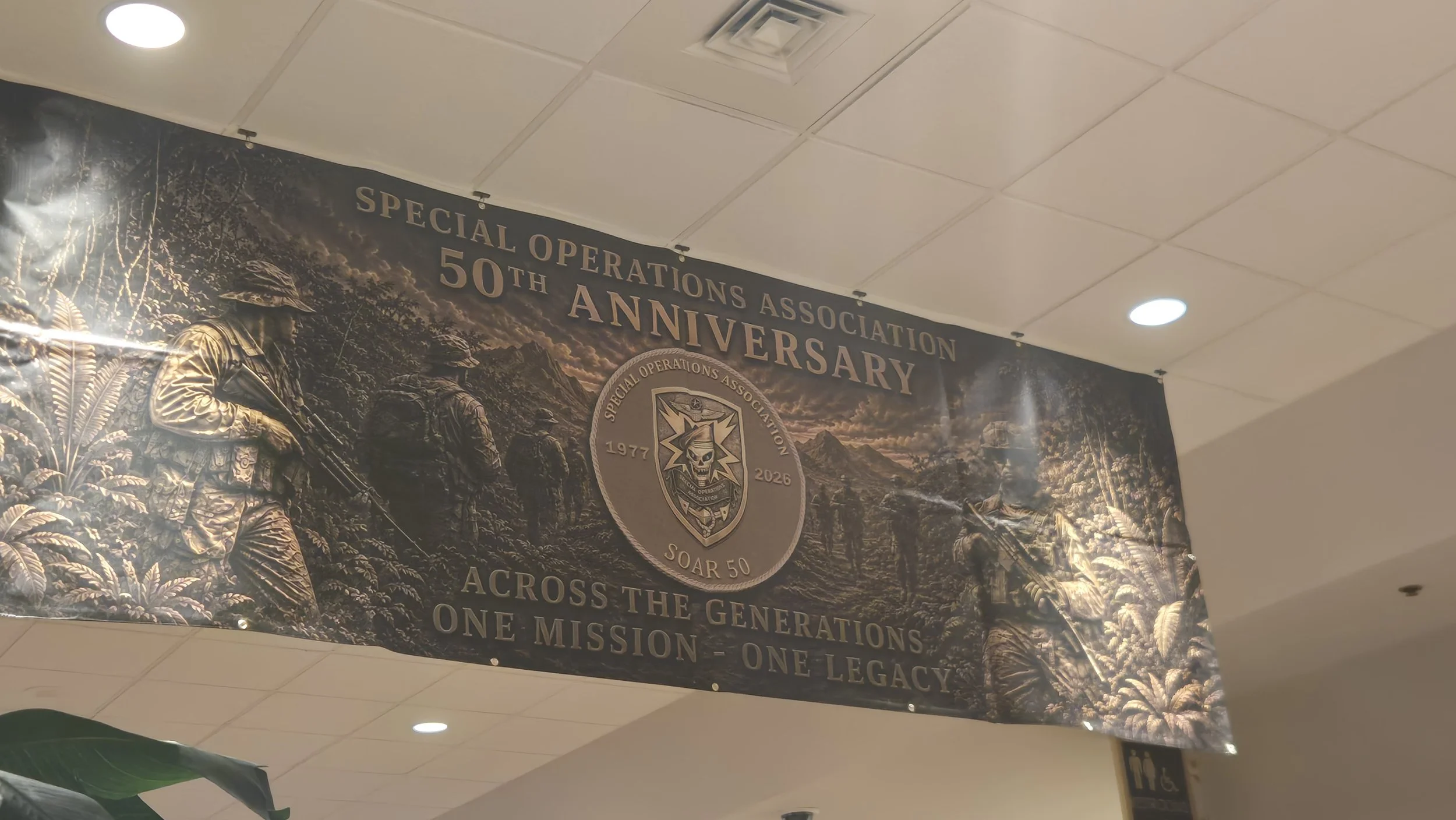
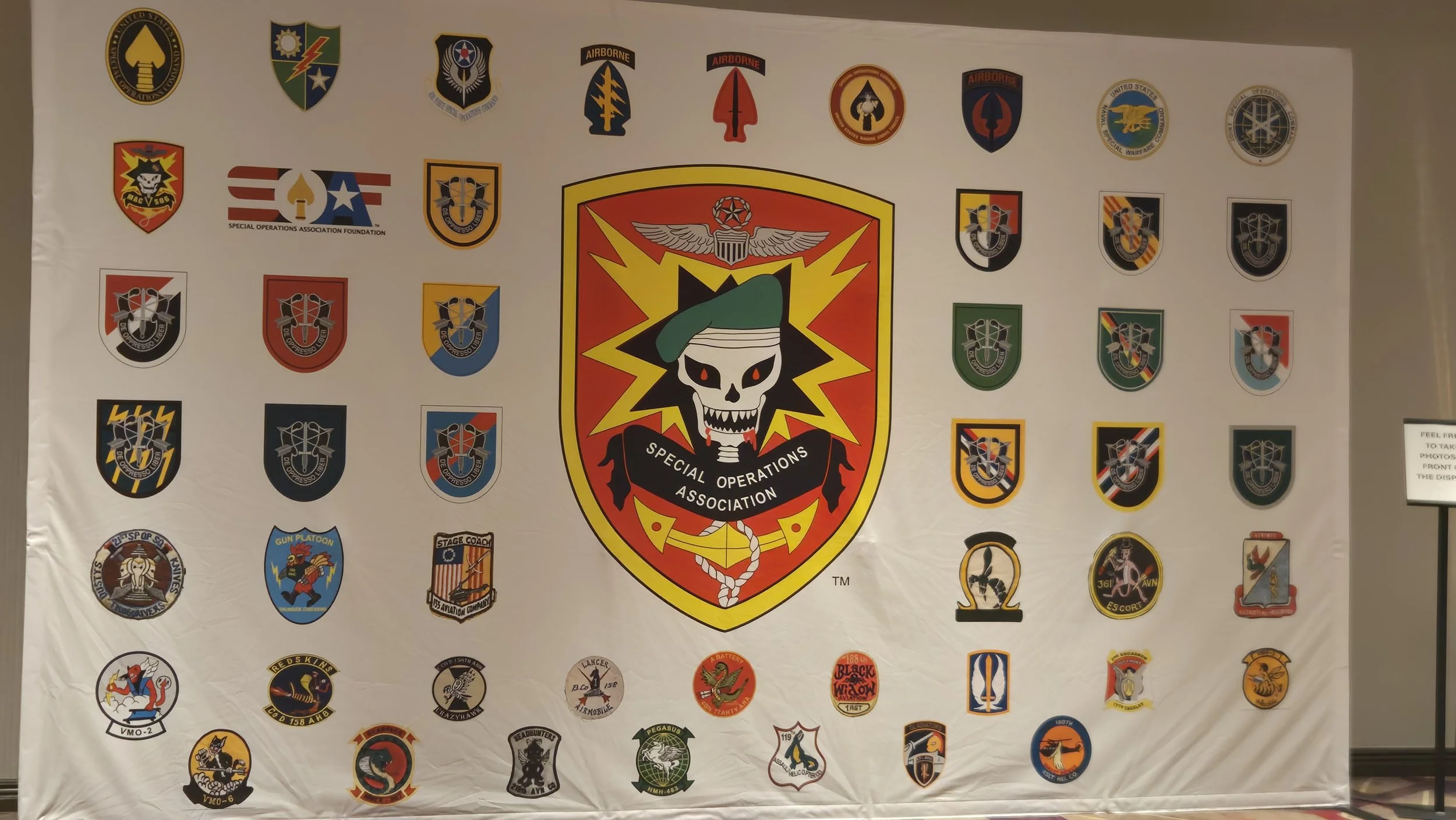
From October 13-15, representatives from the League attended Special Operations Association’s 50th Reunion. The League was invited there to participate in a POW/MIA briefing to update these Special Operations Forces Veterans on League operations and what these veterans can do to help achieve the fullest possible accounting of their missing brothers in arms. Thank you to all who attended, and thank you SOA for having us out there.
SOAR 50 REMARKS - 10/14/26
CONTINUED ADVOCACY AND OUR CONTINUED MISSION
I, of course, want to begin by expressing gratitude to the Special Operations Association for hosting SOAR’s 50th Anniversary Reunion and putting together a really engaging agenda, including this POW/MIA-focused symposium.
A bit of personal background, since to many I am a new face - I joined the League initially as the archivist a little over three years ago. My knowledge of the mission, like many younger people, came from family friends and relatives who had fought in the Vietnam War. These men taught me and many of the next generation the fundamentals like fishing and hunting, but they also taught me the importance of duty to this nation…that service to the basic freedoms we enjoy has not come without sacrifice. Similarly, this organization has taught me lessons about leadership and perseverance which can only be attained by overcoming challenges head on.
It is understood to many here that there have been many challenges across the mission, notably the continued operational priority of Vietnam War accounting, over the past few years. Much of these challenges have been from forces beyond routine control - shifting global politics and pandemics are no walk in the park. In addition are the growing pains of change. It’s real effects have tested our patience, our resources, and at times, our faith that the work before us was being advanced with the grit it requires.
But we have endured. Today, we can say that we have emerged not only with our commitment intact but with strong foundations and plans for the work that lies ahead.
This past year has been a year of adjusting and strengthening our foundations. We have undertaken less visible, but essential modernization and established new relationships upon which our future outreach depends. We moved to a new office, brought on new staff, and elected a new board. We established an internship program and entered into new partnerships. We have completed the organization of our Archival Preservation Project, now on its way to George Mason University. We have collaborated on events with Veterans Service Organizations, patriotic civic groups, and NGOs/VSOs working in Southeast Asia. We have met with congressional staffers, with defense representatives, and even with the Director of National Intelligence. Such accomplishments are not always flashy, but critical work rarely is.
These are positive accomplishments, and continuing to enhance our internal and digital outreach capabilities is not simply to make our organization more engaged or our operations more sophisticated. It is to make our actions more consequential when it comes to distributing historical knowledge and bringing change that we hope will drive more comprehensive results.
We want these relationships to grow into projects that spread awareness, certainly. But we must aim higher than awareness alone. We must work toward stronger alignment between the concerns of families, the knowledge of veterans, research and evidence scattered across archives, and the policies of the numerous governments involved with accounting for the missing.
Shared objectives must be clear: facilitating robust interviews and investigations while there is still time, regular field recoveries, continued identifications, and ending the families’ decades of uncertainty must remain the priority. We remain hopeful based on what we have gleaned from the DIA-funded Mobile Investigative Unit.
All in this room understand the urgency of this mission, and most understand our continued emphasis on the need to reaffirm operational priority of the Vietnam War.
The initial generation of families, veterans, and advocates who carried this mission forward is growing older. The historical link in the chain of memory is breaking. Many in this room knew these men personally. Some may even remember the circumstances of their disappearance and have carried that burden and uncertainty into succeeding decades. Your experiences and insights are histories which cannot be replaced by books and policy studies. So today, I wish to reiterate the importance of being an advocate, and contributing your wisdom to the next generation.
Advocacy is best instilled in us while we are still young. One of my proudest developments at the League is the creation and curation of our Leadership Program. Through this program, we are finding the next generation of leaders and tasking them to bring energy, curiosity and conviction to a national mission that must continue even after you all have passed the torch.
These young advocates will go on to inform and impact policy as they continue through their lives and careers. They will form new connections to this mission inside our own institutions and potentially foreign ones, whose cooperation is essential for the fullest-possible accounting for our missing veterans. They also learn a fuller history of the Vietnam War: not merely the history of battles and military decisions, but the history of following decades. The history of the families who fought for answers, the League which I now serve, and the servicemen-advocates who refused to let the missing be forgotten. The pursuit of answers and accountability for our missing has left a legacy of its own. It has taught us all about continued perseverance, determination, and the enduring obligations of a nation to those who served it.
We all share the responsibility of building the next generation of advocates - ones who I pray march forward with principled understanding of upholding obligations to those who serve for decades to come. That is my source of considerable hope.
As we look toward tomorrow, we must never overlook those who have been advocates for decades. To the members of the Special Operations Association and the Special Forces Association, I want to speak directly.
Many of you became advocates for our missing when you were young as well. You were then called “silent professionals,” but in the years following your service you became vocal warriors. You have carried the traditions of your service while insisting, through words and actions, that our government does everything within its power to account for your missing brothers-in-arms.
For those of you that served alongside those still missing and unaccounted-for, as well as those who have been identified and repatriated: You understand that these are not simply names in record, but men with whom you trained, planned, deployed, and confronted the greatest of dangers.
You bear a burden that few can fully comprehend, but also possess insight that no later narrative can reproduce. You know on a human level what is truly at stake.
I pray that the fiery determination and purpose which have sustained your efforts for so many years will continue to burn. Let it be expressed in the testimony you continue to give, the records you preserve, the questions you put before our government, and the younger advocates whom you mentor. Let it continue to drive us toward the fullest-possible accounting.
DPAA continues to report 1,565 Vietnam War personnel unaccounted-for across Vietnam, Laos, and Cambodia. Even more cases exist across all American conflicts. Numerous categorizations for every case represents a unique story, a family with questions, and an obligation that has not yet been fulfilled.
We cannot promise an accounting of all missing, or that immediate families may receive an answer in this lifetime. But we can insist that applied efforts be serious. We can insist that evidence and witnesses are pursued, that promising leads receive quick and serious attention, that we find ways to enable our government to use the fullest extent of its capabilities, and we insist that the families receive not only respect now, but feel that the frustrations of the past can be reconciled and overcome.
That is the purpose of the renewed efforts and infrastructure we have built this past year. That is the promise of the partnerships we are establishing. And that is the responsibility we must pass to the leaders who will follow us. But we must not measure our success on purpose and promise, but instead by what our efforts produce.
Let us therefore continue with discipline, and with an unwavering determination to see this mission through to a successful conclusion. Let us welcome the continued advocacy of all generations, and welcome the enthusiasm of the next. Let us honor all of you who served and helped carry this noble cause, and stand beside the families who continue to bear its greatest burden.
And let us ensure that, for every man still missing, our nation answers that the search continues.
Thank you.